
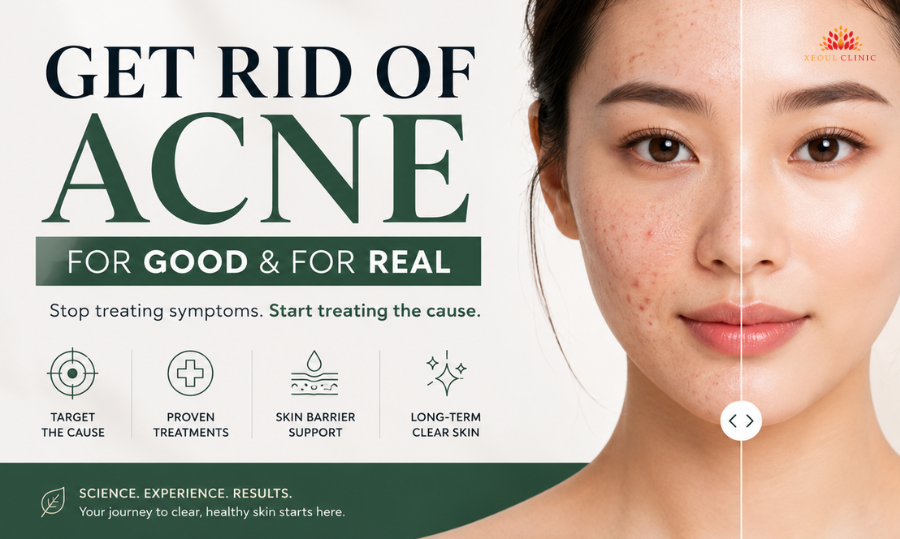
GET RID OF ACNE
FOR GOOD & FOR REAL
Stop treating symptoms. Start treating the cause.
Treating acne vulgaris requires a multimodal approach tailored to severity and skin type, often combining topical and systemic therapies to target clogged pores, bacteria, and inflammation.
Consistency and patience are essential, as visible improvements typically take 8 to 12 weeks.

1. Topical Treatments (For Mild to Moderate Acne)
Topical medications are the foundation of acne management, addressing multiple pathogenic factors simultaneously.
● Retinoids: Vitamin A derivatives (e.g., adapalene, tretinoin) unclog pores and prevent new lesions from forming. It works by speeding up skin cell turnover and boosting collagen production.
● Benzoyl Peroxide: An antiseptic that reduces bacteria on the skin and helps clear blackheads and whiteheads.
● Antibiotics: Medications like topical clindamycin target inflammation and bacteria. They should never be used alone to prevent antibiotic resistance.
● Acids: Salicylic acid helps exfoliate and penetrate pores, while azelaic acid reduces inflammation and post-acne dark spots.
2. Oral Medications (For Moderate to Severe Acne)
When topical treatments are insufficient, systemic therapies are often introduced.
● Oral Antibiotics: Tetracyclines (eg: doxycycline) are used for their strong anti-inflammatory properties. To prevent antibiotic resistance, should be combined with topical benzoyl peroxide.
● Hormonal Therapies: anti-androgens like spironolactone can help regulate acne flare-ups caused by hormonal fluctuations.
● Oral Isotretinoin: It addresses all four primary causes of acne
Other than treatment, is is important to eliminate the risk in worsening the conditions with general skincare and lifestyle changes by maintaining a healthy diet, practise personal hygiene and use good and effective skin care!
